
Inspect GOOSE identity, sequence, timing and payload context; use bounded SMV capture where the workflow applies.
GOOSE analysis →Real screenshots · no marketing mockup · evidence-first
See the ARSAS workflow before downloading.
This is a guided product storyboard, not a simulated relay session or time-to-value claim. All eight images are actual operator screenshots captured on 25 October 2026 from ARSAS v1.6.42, not generated mockups. Hardware qualification and lossless SOE are separate.
Investigation workflow
When something happens, follow the evidence from network behavior to the disturbance record.
ARSAS keeps these views connected by IED and engineering context. Start with the clue you have; move deeper only when the next source can answer a new question.
Keep signal reference, state, quality, IED time, receive context and acquisition source together.
Event evidence →Stay inside the originating IED session, scan remote files and preserve completeness and transfer state.
Retrieve records →Open the record in ARSAS and inspect synchronized analog/digital evidence, trigger position and protection channels.
See native analysis →Compare the available times and states across sources while keeping clock, source and acquisition differences visible.
Review evidence boundaries →Correlation is not automatic causation proof.GOOSE capture time, IED event time, Reporting receive time and COMTRADE time can come from different clocks and acquisition paths. ARSAS helps keep them reviewable; protection acceptance still requires the approved test method and independent engineering checks.
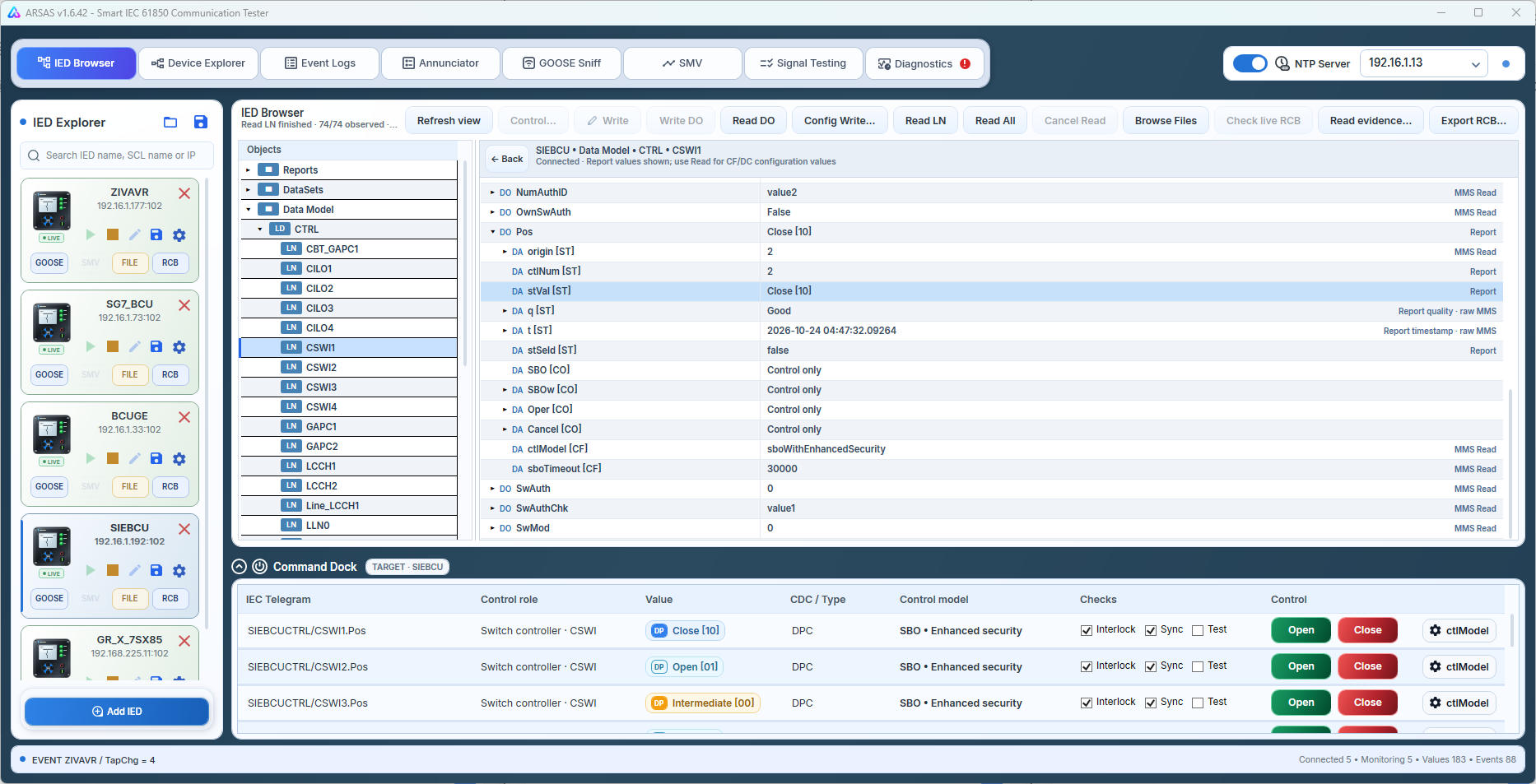
IED Browser
Browse Reports, DataSets and a typed live CSWI data model while preserving IED identity and guarded control context.
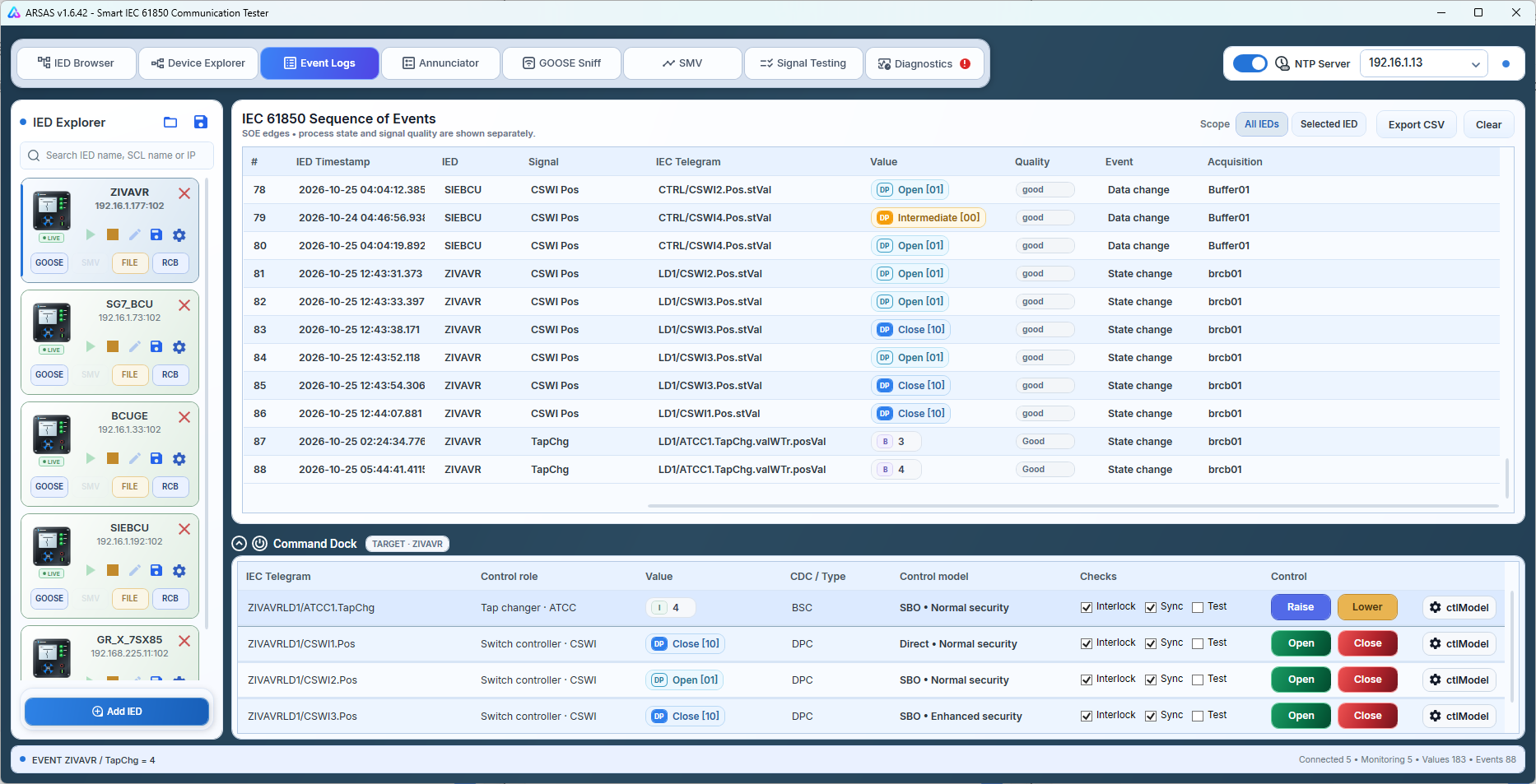
Event Logs
Review sourced SOE entries, IED timestamps, values, quality and acquisition. Continuity must be qualified separately.
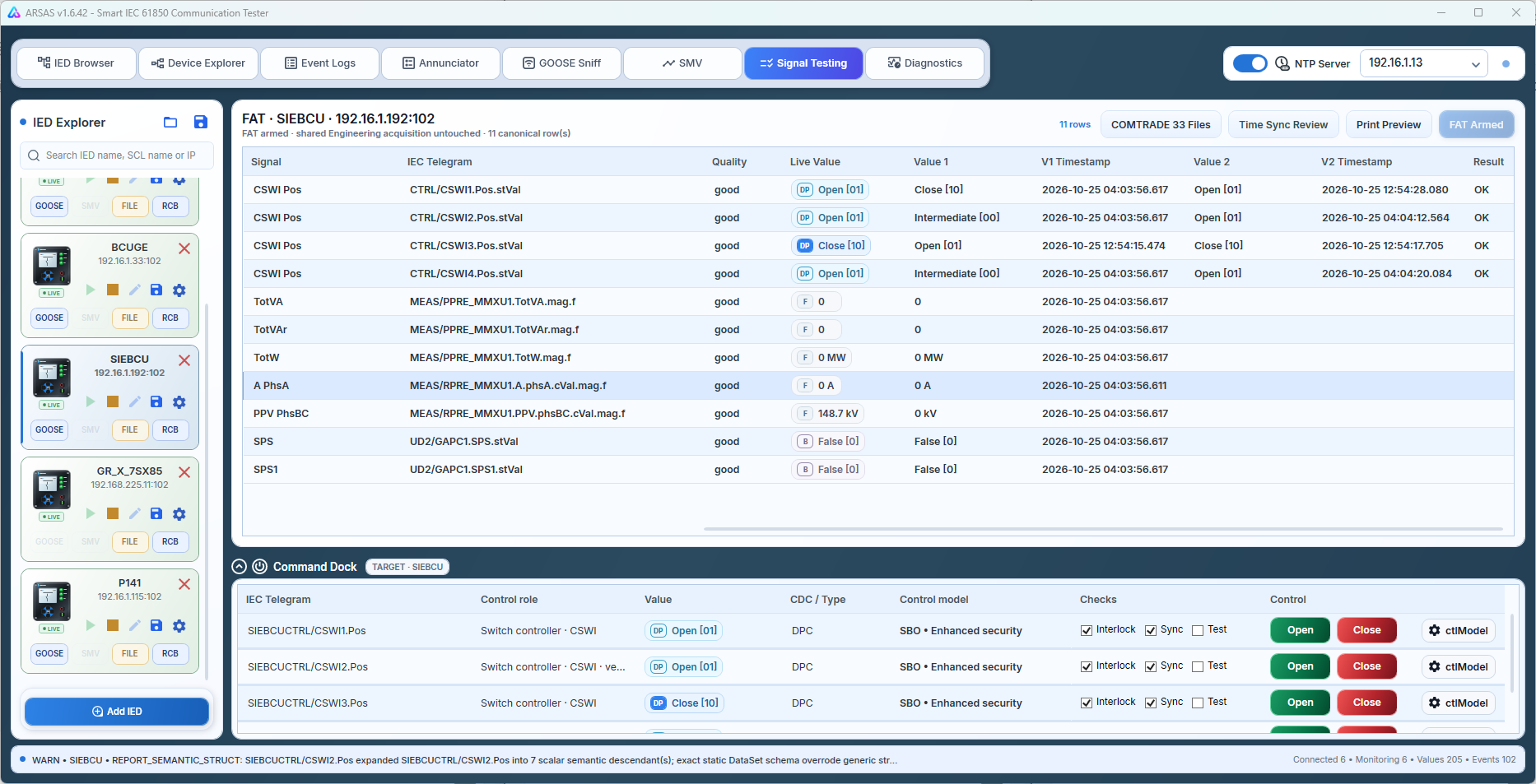
Signal Testing / FAT
Compare Value 1 and Value 2 with timestamp, quality and exact signal references.
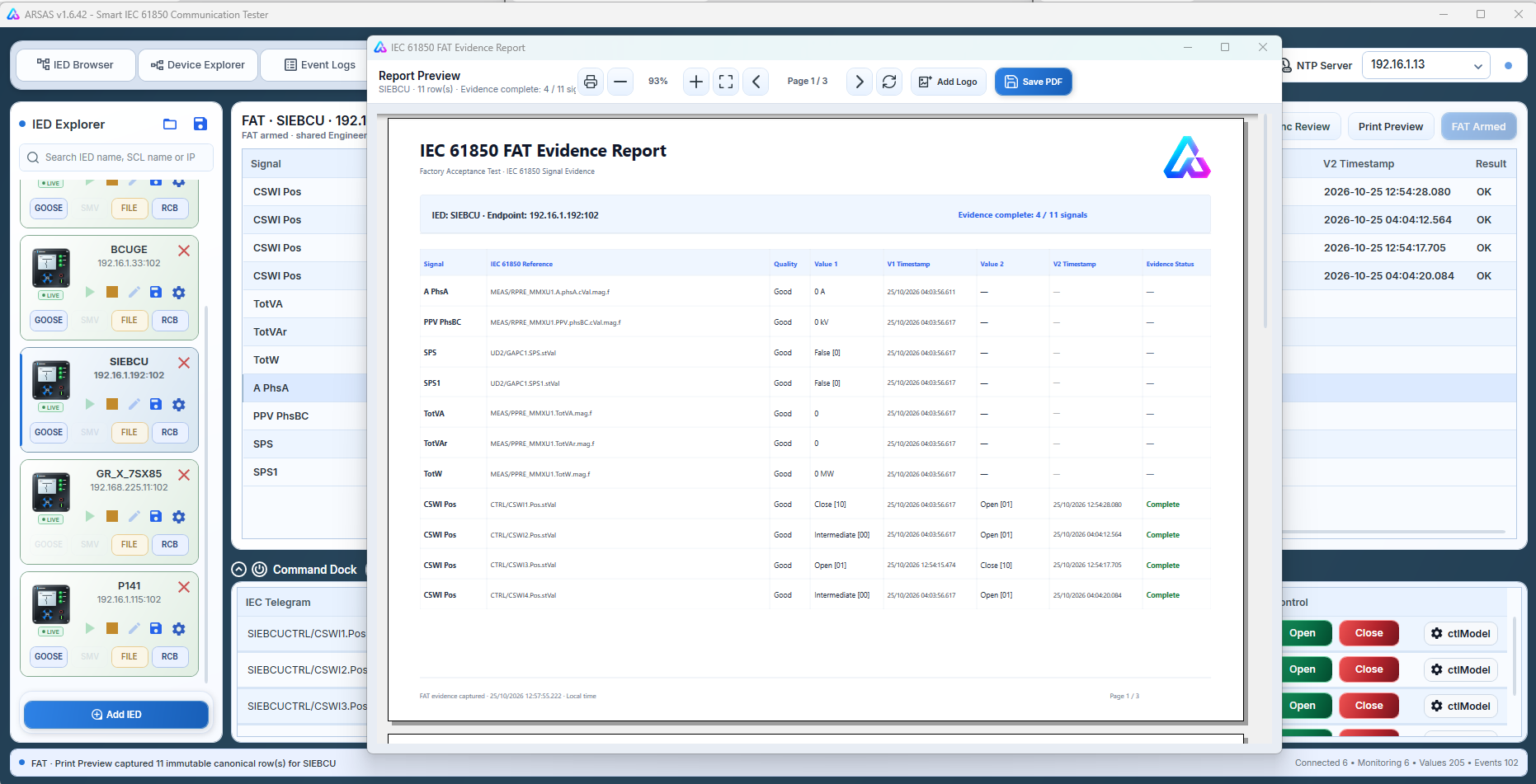
FAT PDF Preview
Preview a three-page report with 11 selected signals and four complete evidence records; incomplete rows remain visible.
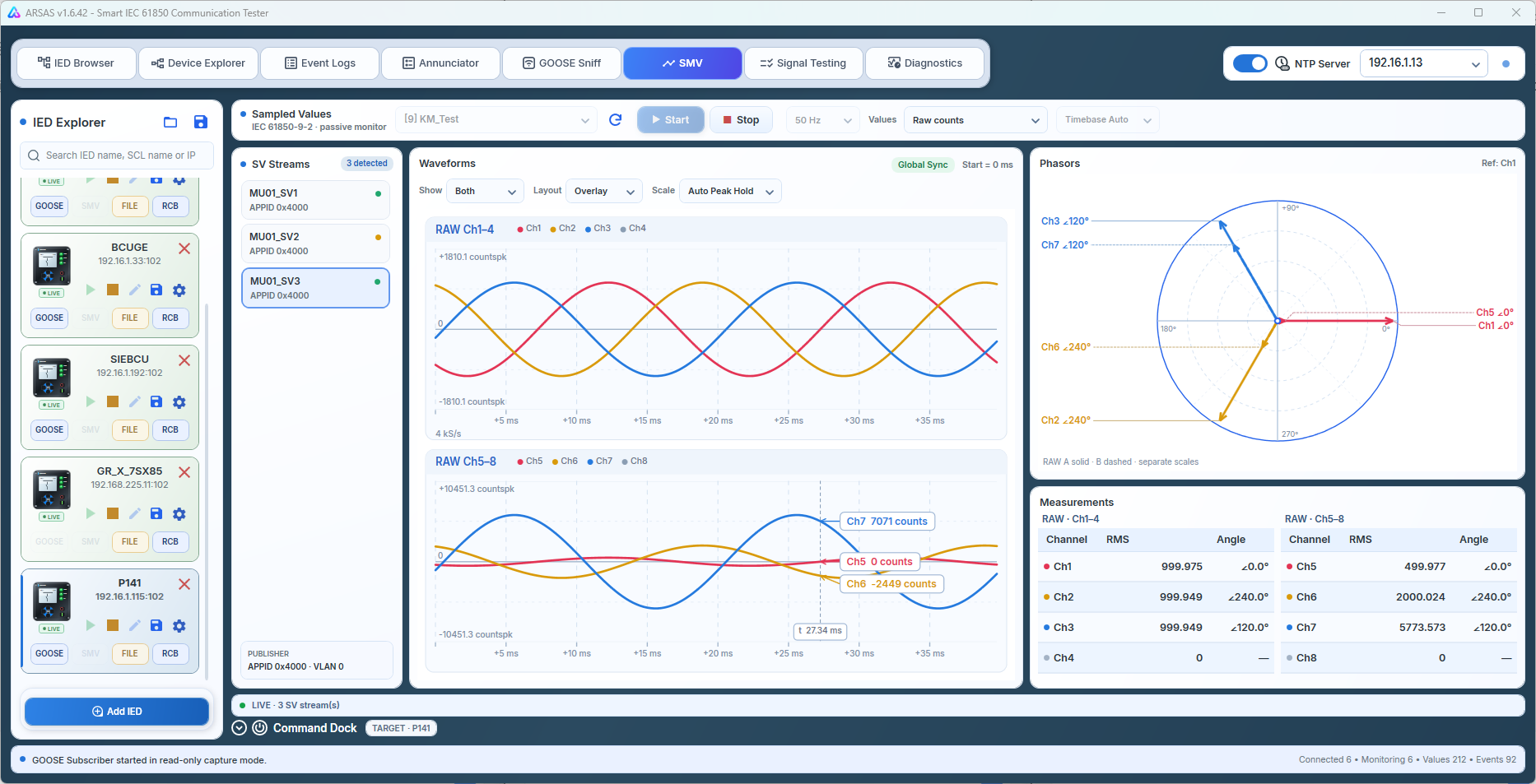
Sampled Values / SMV
Inspect three received SV streams, raw waveforms, phasors and measurements. Hardware parity remains under test.
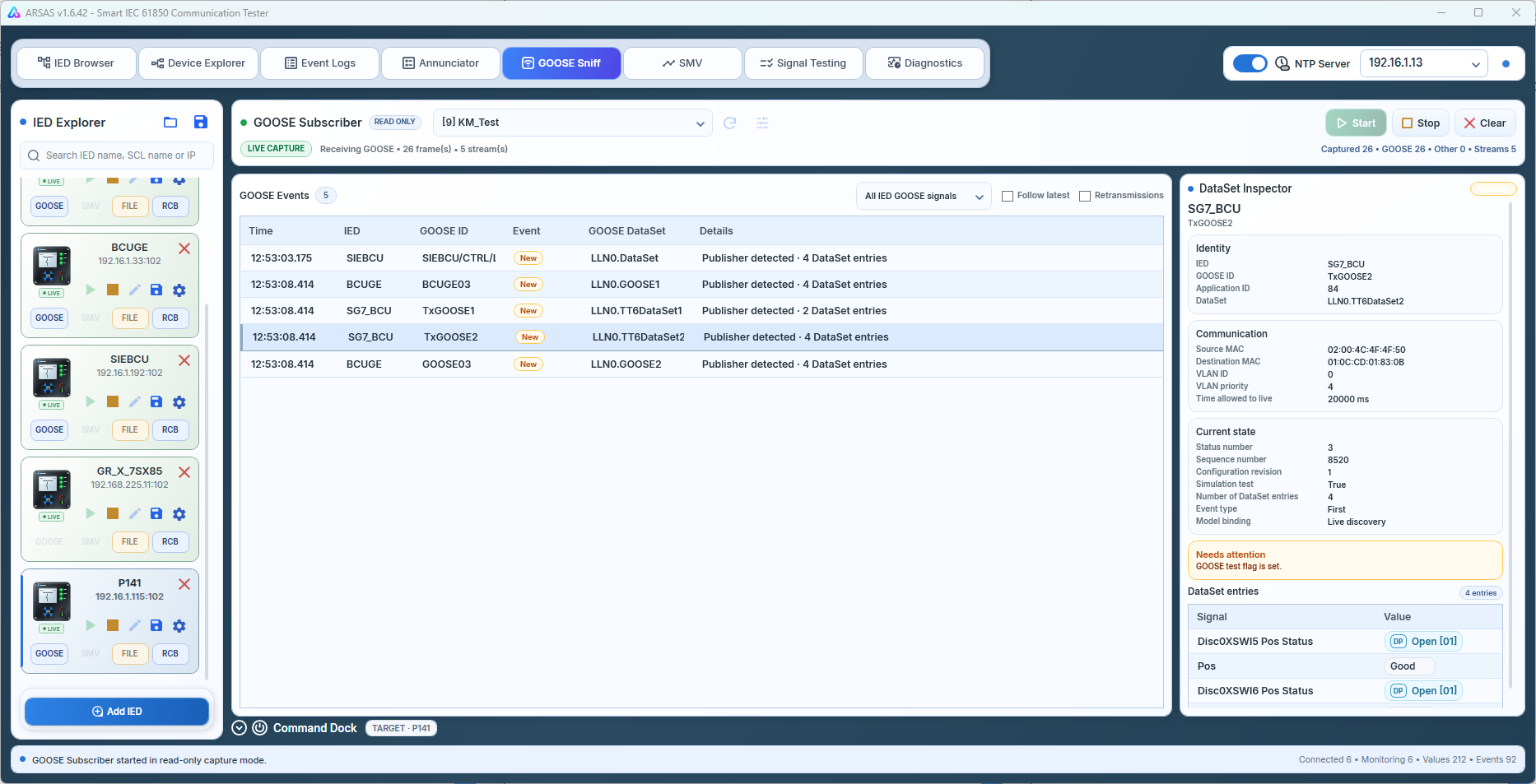
GOOSE Subscriber
Inspect passive GOOSE events, publisher identity, DataSet member values and state.
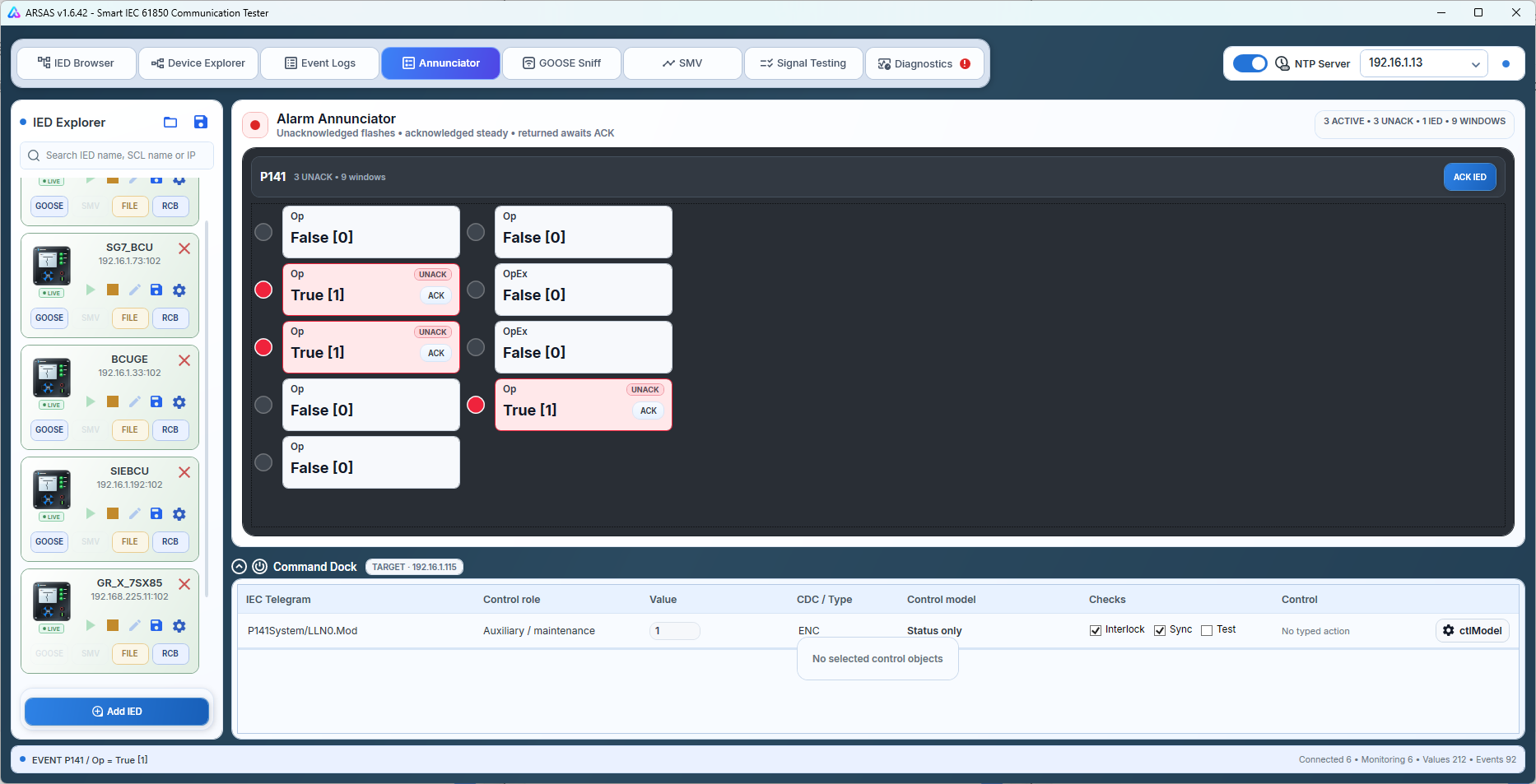
Alarm Annunciator
Distinguish active, unacknowledged, acknowledged and returned alarm states per IED.
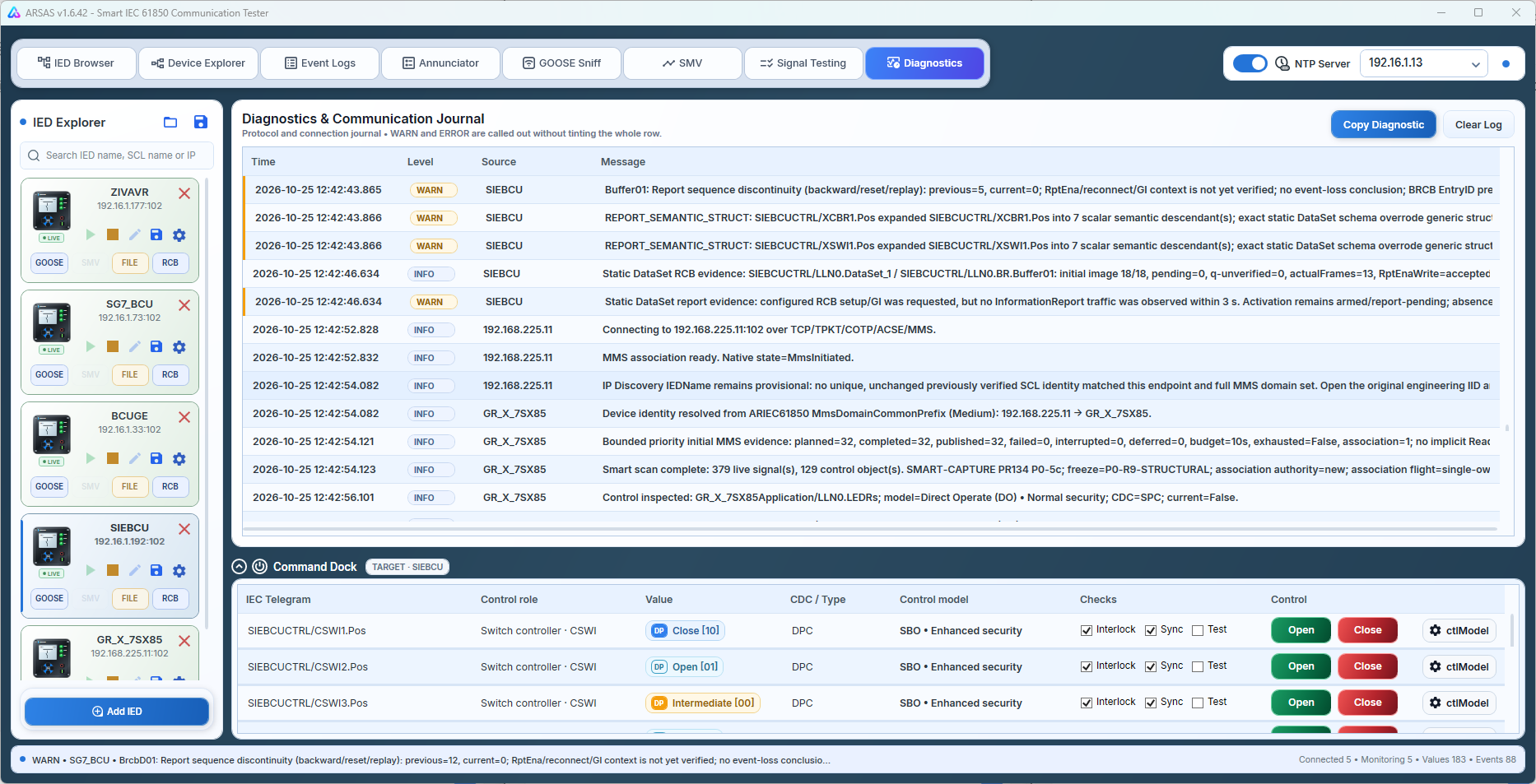
Diagnostics Journal
Inspect WARN/INFO protocol traces and explicit report sequence discontinuities without overstating event-loss claims.
The product exposes evidence-oriented workflows.
These screenshots show the current v1.6.42 user interface and workflows. They do not prove interoperability with an untested device or guarantee a result on an operational network.
Use Quick Start before field testing.
Verify the package, confirm network authorization, obtain one read-only value and review diagnostics before attempting reporting recovery, file transfer, GOOSE capture or control.
Verified stable · ARSAS 1.6.42
Ready for an approved Windows workstation?
Installer and portable packages share the same application scope. Verify the published SHA-256 and review the release boundary before field use.
Release notes, limitations and signing status →