
Establish device context
Confirm the approved endpoint, active interface, device identity and live MMS model before interpreting results.
Use ARSAS to inspect current values, quality, timestamps, reporting state, GOOSE behavior, command completion, fault-record access and per-IED diagnostics while commissioning activities are performed under an approved procedure.
Commissioning pressure can encourage premature changes. Start by preserving the evidence already available from the IED and network.
Confirm the approved endpoint, active interface, device identity and live MMS model before interpreting results.
Review selected values, quality, process timestamps, reason-for-inclusion and semantic event history.
Check RCB state, DataSet coverage, stream identity, sequence counters, retransmission and payload evidence.
Use typed Direct or SBO workflows only when the procedure, role and plant condition permit active control.
Unsupported services, rejected writes, report gaps, timeouts and command failures remain visible for root-cause analysis.
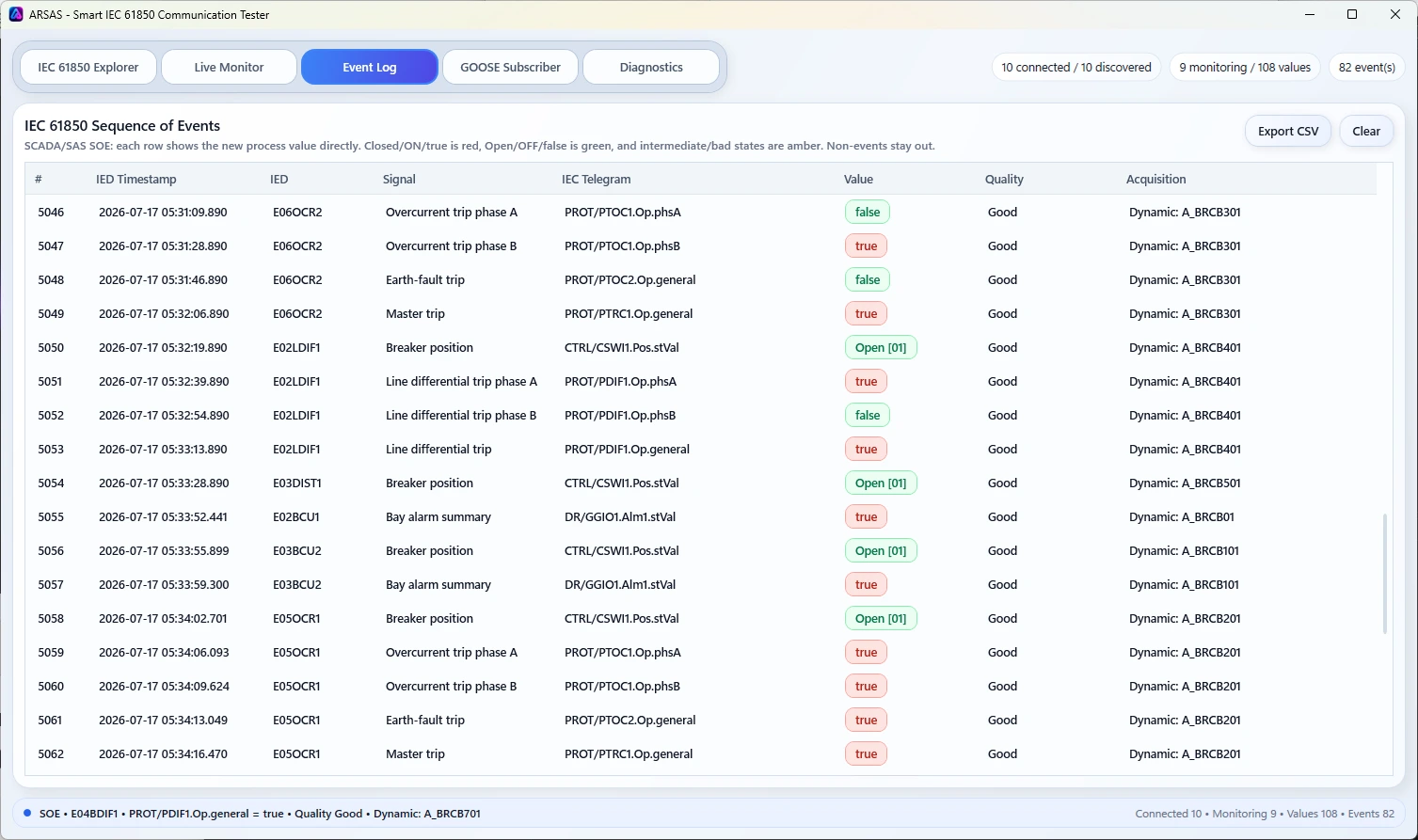
Separate continuous values from meaningful changes while retaining timestamp, quality, source and originating-device attribution.
ARSAS does not grant switching permission, determine plant safety, replace protection testing, approve settings or override site procedures, cybersecurity controls and independent verification.
Installer and portable packages share the same application scope. Verify the published SHA-256 and review the release boundary before field use.
Release notes, limitations and signing status →